

Of all the moments at a wedding reception, the parent dance is one of the few where the spotlight briefly shifts away from the couple. For a few minutes, the focus turns to the people who raised them, cheered them on, and helped bring them to this day.
Traditionally, that moment has followed a familiar pattern: a father-daughter dance and a mother-son dance. But families look different these days, and so do weddings. Many couples today are celebrating blended families, two moms or two dads, grandparents who played a parental role, or a parent who is no longer with them. Others simply have a parent who would rather do anything than dance in front of a crowd.
For couples celebrating at Wentworth by the Sea Country Club, this moment can unfold against the backdrop of Little Harbor at sunset or in the warmth of an elegant reception space. Wherever it takes place, the goal is the same: to honor family in a way that feels genuine.
If the traditional format doesn’t quite fit your family, these parent dance ideas offer meaningful ways to make the moment your own.
Start With What the Moment Means to Your Family
Before choosing a format or a song, think about who you want to honor and how they would feel most comfortable being celebrated.
Some parents have been looking forward to this dance since the day you got engaged. Others may feel nervous about being the center of attention. A grandparent may want to be included but might find a full song on the dance floor difficult.
There is no one right answer. The most meaningful parent moments reflect the relationship itself rather than tradition alone. A short conversation with your family early in the planning process can help you choose an approach everyone will feel good about.
The Traditional Parent Dance, Updated
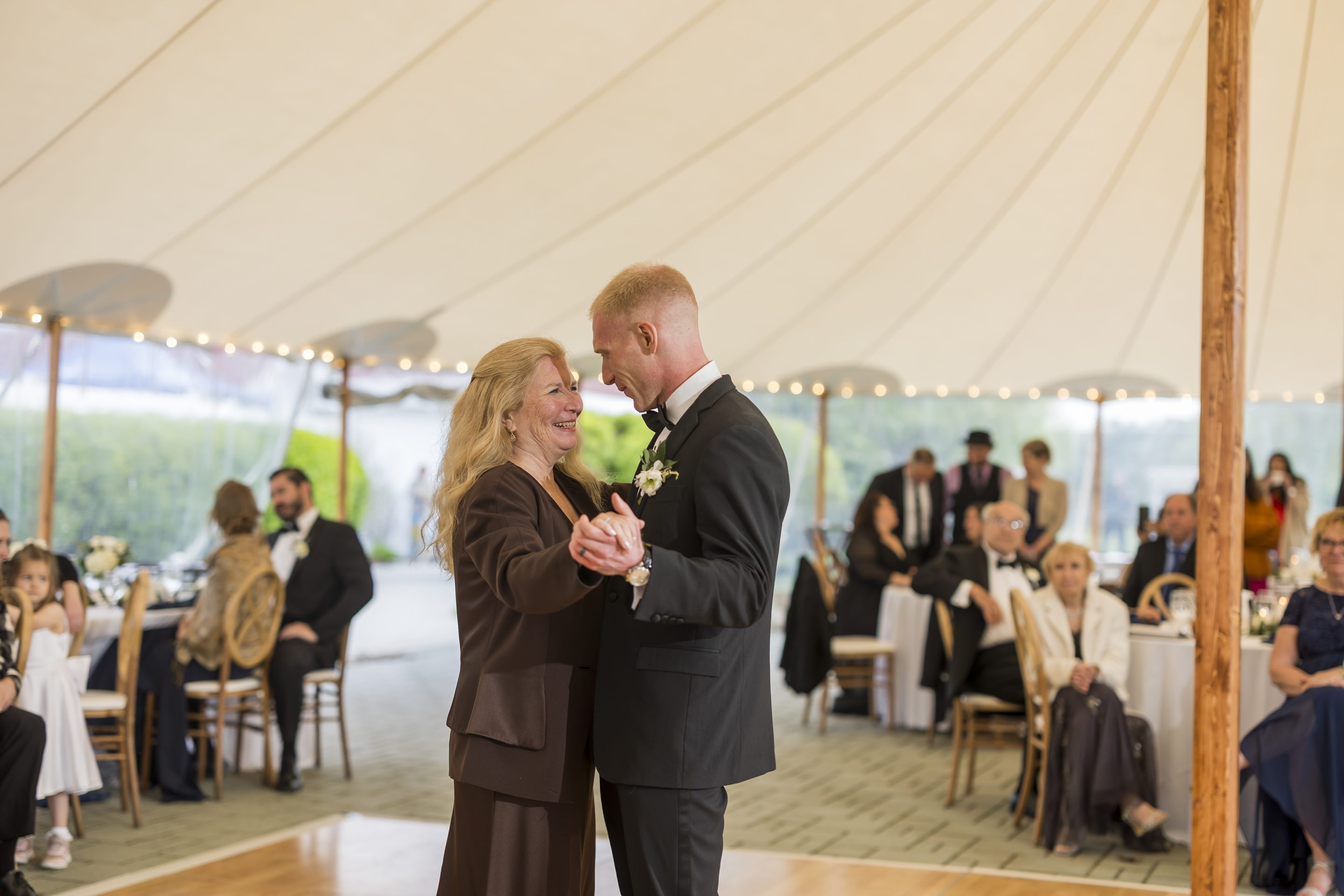
The father-daughter and mother-son dances remain beloved traditions, and there is nothing wrong with keeping them. If the classic format feels right for your family, a few small updates can make it feel fresh and personal.
Consider shortening the song to around two minutes, so the moment stays focused and emotional rather than lingering. You might also choose a song from your parent’s generation instead of a modern wedding favorite, or ask your DJ or band to blend two songs, starting slow and shifting into something upbeat.
Some couples choose to hold both parent dances simultaneously. This saves time in the reception timeline and creates a lovely visual moment with both families on the dance floor together.
For help choosing the right song, explore our guide to curating the perfect wedding playlist.
What Are Some Meaningful Parent Dance Alternatives?
If the traditional format doesn’t reflect your family, there are plenty of thoughtful options to consider. Each one can be adapted to your guest list, your entertainment, and the atmosphere of your reception.
A Combined Family Dance
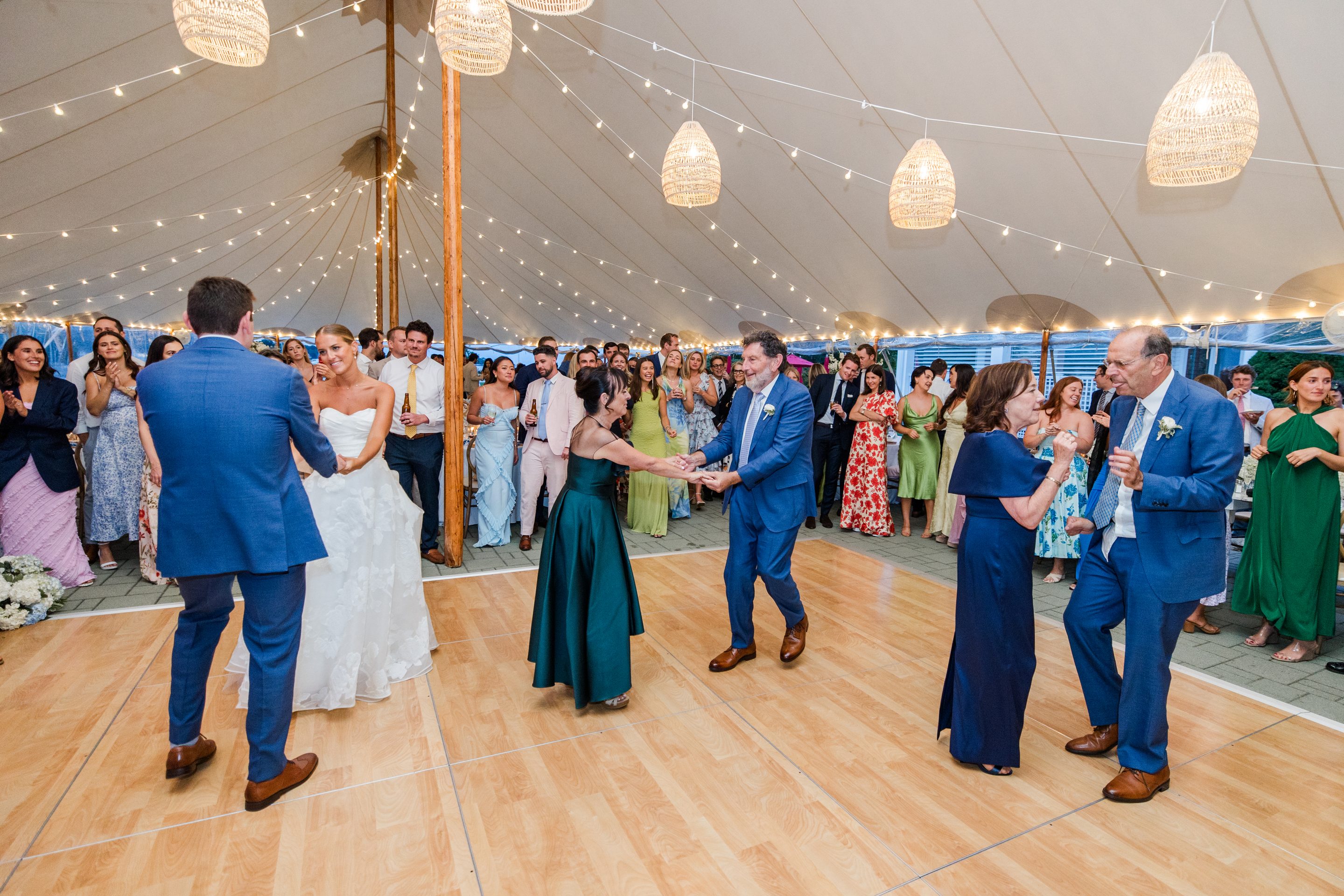
Invite both sets of parents to join you on the dance floor at the same time. Halfway through the song, your DJ or band can invite siblings, grandparents, and eventually all your guests to join in. It is an inclusive way to celebrate both families and naturally transition the evening into open dancing.
An Anniversary Dance
All married couples are invited to the dance floor. As the song plays, your DJ or bandleader asks couples married fewer than five years, then ten, then twenty-five, to step off until only the longest-married couple remains. It honors your parents and grandparents alongside other couples who have inspired you, and it is often one of the most memorable moments of the night.
A Dance With Grandparents or Chosen Family
The people who shaped you are not always your parents. A dance with a grandparent, aunt, uncle, godparent, or mentor can be just as meaningful. If a grandparent isn’t comfortable or able to dance for the length of a full song, a slow sway for a verse or two can be just as special.
A Blended Family Dance
For blended families, a single parent dance can feel incomplete. Consider a dance that begins with one parent and has a stepparent cut in partway through, or invite the whole family to the dance floor together. The goal is to make everyone feel included rather than ranked.
A Dance to Your Parents’ Wedding Song
Ask your parents what song they danced to at their own wedding and use it for your parent dance. It creates a meaningful connection between generations and often surprises parents in the best possible way.
How Can You Honor a Parent Who Isn’t With You?
For couples who have lost a parent, the parent dance can feel bittersweet. There is no right or wrong way to approach it, and choosing to skip the dance altogether is a perfectly valid choice.
If you would like to include a moment of remembrance, consider:
- Dancing with a sibling, grandparent, or close family friend to your parent’s favorite song
- Asking your DJ or band to introduce the song with a brief dedication
- Weaving a short recording of your parent’s voice into the beginning of the music
- Displaying a framed photo or meaningful keepsake near the dance floor
Keep the tone gentle and personal. Many couples find that a quiet, heartfelt tribute brings comfort to the family and gives guests a meaningful moment to share in the memory together.
Celebrating Family Without the Dance Floor
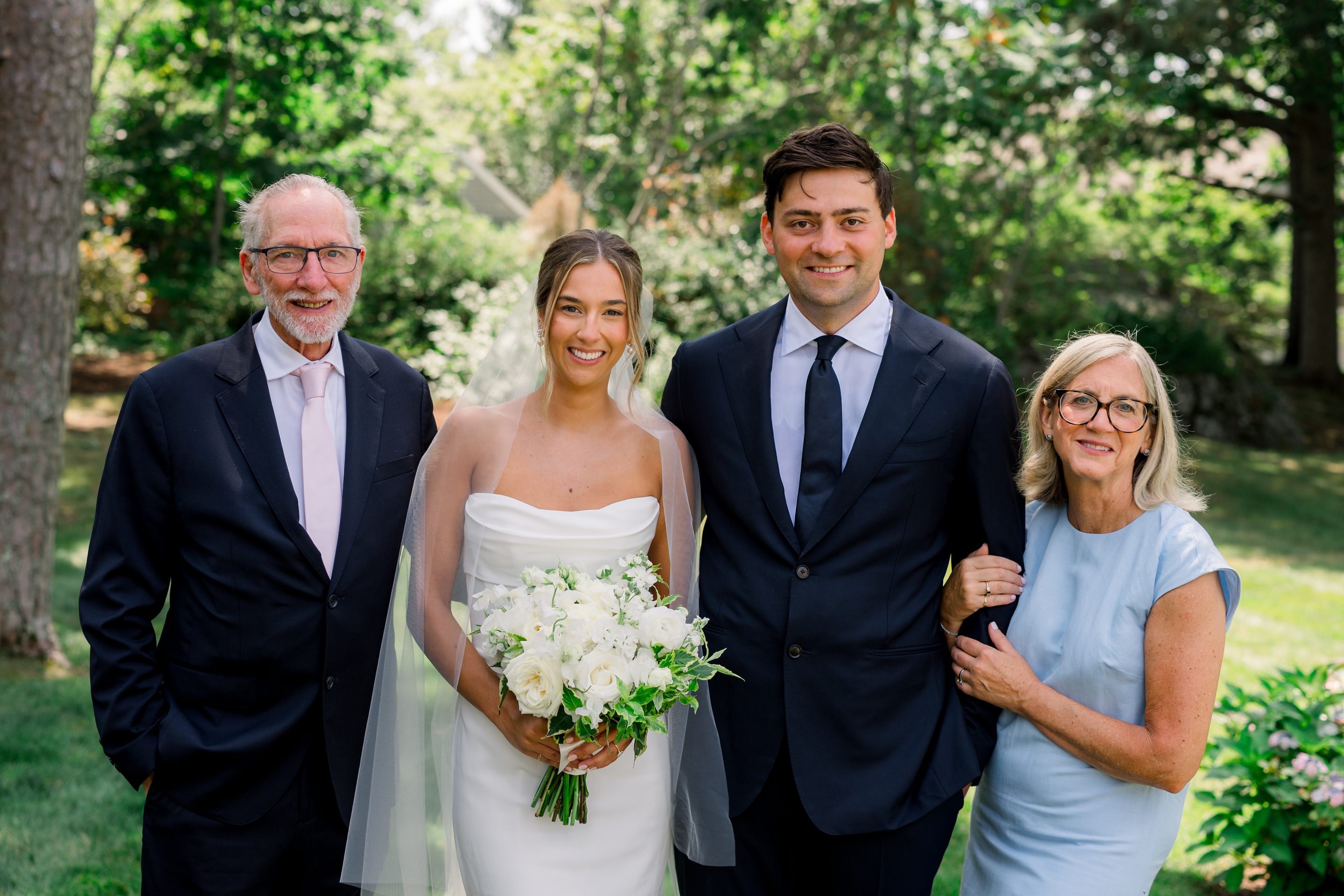
Not every parent moment needs to happen on the dance floor. If your parents are uncomfortable in the spotlight, or if dancing simply isn’t your family’s style, there are other ways to create a meaningful moment.
A parent first look: Before the ceremony, share a private moment with a parent as they see you in your wedding attire for the first time. It is intimate, emotional, and beautifully captured by your photographer.
A letter or toast: Write a letter to your parents to be read privately on the wedding morning, or share a short toast during the reception, thanking them for everything they have done.
A golden hour family portrait: Set aside a few minutes for family portraits on the grounds as the light softens over the water. These often become some of the most treasured photos of the day.
A cultural or family tradition: Many families have rituals that carry deep meaning, from blessings to shared toasts to traditional dances. Including one honors your heritage while giving parents a role that feels natural to them.
When Should Parent Dances Happen During the Reception?
Parent dances usually take place in one of three places in the reception timeline:
- Immediately after your first dance, keeping all of the formal dances together in one moment
- After dinner, as a bridge between the formal portion of the evening and open dancing
- Alongside toasts or other formalities, so guests are already gathered and attentive
Whichever option you choose, keep each dance brief. Two to three minutes is usually enough to make the moment meaningful while keeping guests engaged.
Share your plans with your DJ or band and your photographer well in advance, including song choices, any announcements, and who should be invited onto the dance floor and when. If you’re still deciding on entertainment, our guide to choosing between a live band or DJ can help.
Our Wedding & Events Team can also help you find the right place for parent dances within your reception timeline, so every moment flows naturally into the next.
Making the Moment Personal at Wentworth by the Sea Country Club
The setting can make a parent dance feel even more memorable.
At Wentworth by the Sea Country Club, couples celebrating in the warmer months can take advantage of the coastal surroundings, with The Lawn and The Tent offering views across Little Harbor as the evening light fades. During the November-through-April season, The Pavilion provides an intimate indoor setting where the dance floor becomes the heart of the room.
Wherever your celebration takes place, brief your photographer ahead of time. Ask them to capture not only the dance itself but also the reactions around it: a grandparent wiping away a tear, siblings watching from the edge of the dance floor, or your parents sharing a quiet word. These are often the images families treasure most.
Parent Dance FAQ: Common Questions Answered
Do we have to have a parent dance at our wedding?
No. Parent dances are a tradition, not a requirement. Many couples choose a private moment, a toast, or a family portrait instead. The best choice is the one that feels right for your family.
How long should a parent dance last?
Two to three minutes is ideal. Most DJs and bands can shorten a song or fade it out naturally, keeping the moment meaningful without losing guests’ attention.
Can we combine the father-daughter and mother-son dances?
Yes. Holding both dances at the same time is a popular option. It saves time in the reception timeline and brings both families onto the dance floor together.
How do we include stepparents without anyone feeling left out?
Consider a dance where a stepparent cuts in partway through the song, or invite the whole family onto the dance floor together. Talking openly with each parent ahead of time can help everyone feel included.
What are good alternatives to a parent dance?
Popular parent dance alternatives include an anniversary dance, a combined family dance, a dance with grandparents, a parent first look, or a toast or letter shared during the reception.
Celebrating the People Who Brought You Here
A parent dance is ultimately about gratitude. Whether you choose a classic dance, an anniversary dance, a quiet first look, or a heartfelt toast, the goal is to honor the people who shaped you as you begin a new chapter together.
Families come in many forms, and your celebration should reflect yours. When the moment feels genuine, it becomes one of the memories your family will return to for years to come.
Planning Your Wedding at Wentworth by the Sea Country Club?
From sunset views over Little Harbor to elegant reception spaces in every season, Wentworth by the Sea Country Club offers a memorable setting for celebrating family on New Hampshire’s Seacoast. Connect with the Wedding & Events Team to begin planning a celebration that feels thoughtful from the first dance to the last.

Photography: Marie Cowan, Allie Dot Photography, Lauren Dobish, Casey Durgin